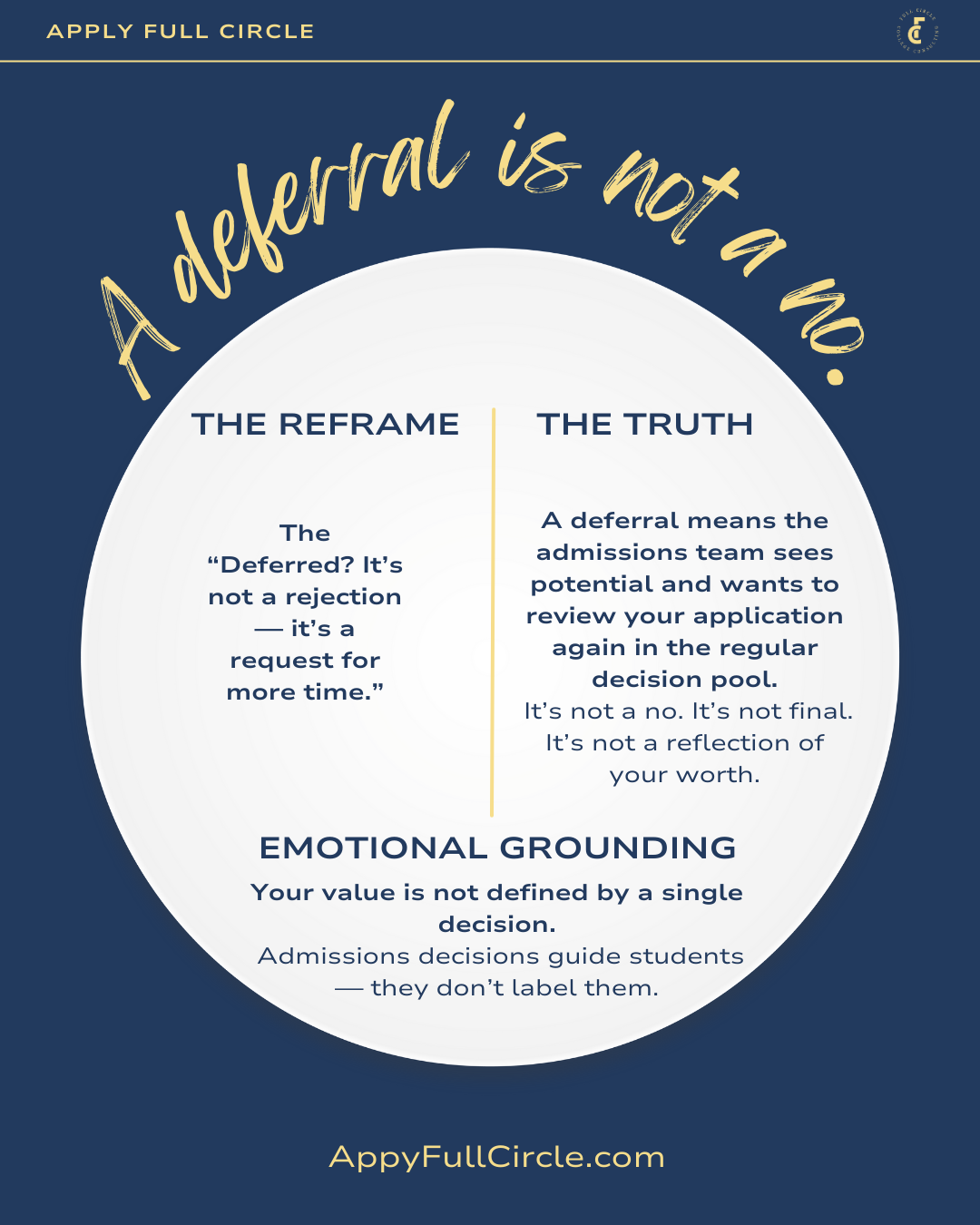
A Deferral is not a “no”
What a College Deferral Really Means (and Why It’s Not a “No”)
Receiving a deferral decision can feel confusing and discouraging for students and families — especially after the excitement of applying Early Action or Early Decision. But here’s the most important truth to remember: a deferral is not a rejection. It is simply a request for more time.
When a student is deferred, the admissions office is saying they see potential and want to continue reviewing the application in the context of the full applicant pool. Early Action decisions are often made quickly and can be heavily based on academic statistics such as GPA and test scores. A deferral, however, usually means your application will now receive a more complete, holistic review that includes your full resume, activities, essays, senior year coursework, and overall fit with the institution.
One of the key benefits of a deferral is that it allows students to submit first-semester senior grades, along with any new achievements, leadership roles, awards, or recognitions earned during the fall. These updates can make a meaningful difference and strengthen an application for the regular decision round.
This is why it’s so important for seniors to stay engaged and finish strong—academically and personally — throughout the entire school year. Colleges truly value consistency and progression, two words we focus on at Full Circle.
Just as important to remember: an admissions decision does not define you. Acceptance, deferral, and even denial are simply outcomes within a highly competitive process — they are not a measure of your worth, character, or future success. Ultimately, admissions decisions help open and close doors so that students can land where they truly belong. Finding the right college fit is what matters most. Often, the path that feels uncertain at first becomes the one that leads to the most incredible opportunity.
The waiting can feel long and stressful, but don’t lose hope. A deferral means the admissions team wants more time to get to know you and fully understand your story. In many cases, that extra time can work in your favor.